Skip to content

Detection isn’t the same as prevention

Snyk Evo brings powerful capabilities into code, pipelines, and runtime environments. It continuously identifies vulnerabilities in code.

But threat modeling answers a more important question, at a more critical time:

What could go wrong? Before it’s built.

Security that starts after design decisions have been made, or without those decisions at all, is missing the entire point of secure-by-design.

Threat modeling begins at architecture and design, where risk can be understood, controlled, and prevented. This leads to better risk awareness, faster release cycles, and improved security posture. Shifting vulnerability detection left to start before code is written is a positive step, but it falls short of threat modeling, and so do the benefits.

ThreatModeler brings the secure design context Snyk needs

Snyk can help identify risk signals across code, dependencies, containers, and cloud configurations. But those signals are more useful when they are grounded in a clear understanding of the system: what it is intended to do, where trust boundaries exist, how data should flow, which abuse cases matter, and which controls are required by design.

That is the context ThreatModeler provides.

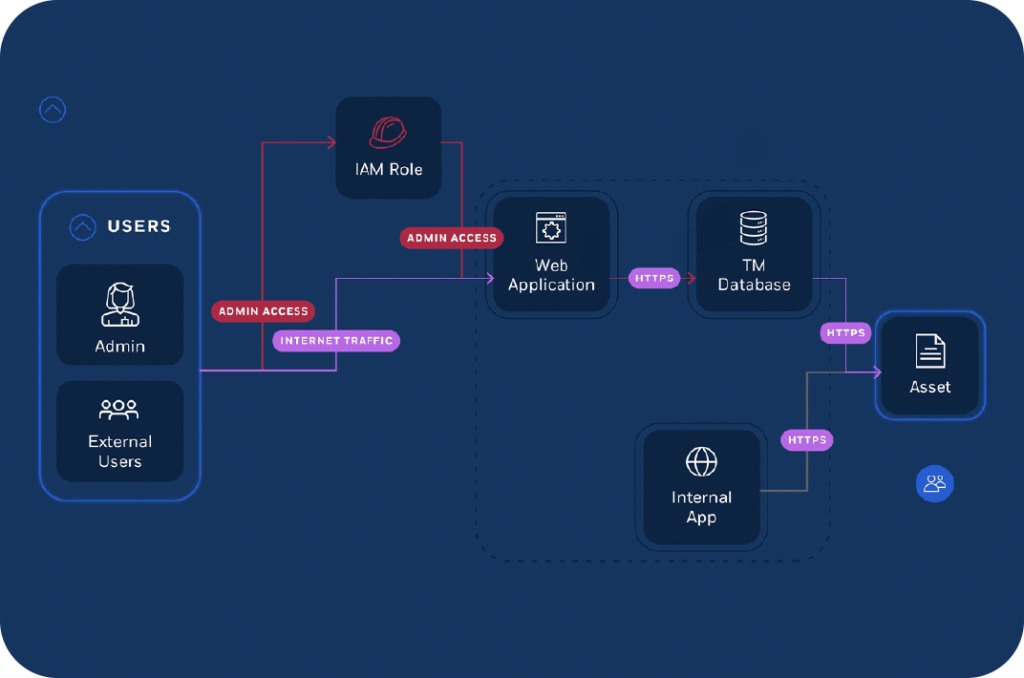
ThreatModeler operationalizes threat modeling as the upstream security decision system for secure design. It captures architecture and intent, identifies what could go wrong, maps threats to controls, and documents the rationale behind those decisions. That gives security and engineering teams a governed foundation for secure-by-design decisions before downstream tools begin validating implementation.

Snyk helps teams see where software may be exposed. ThreatModeler defines the secure architecture that those findings should be measured against and that AI coding agents should be building for.

ThreatModeler + Snyk

Different roles, stronger together

Bottom line: Snyk detects risk. ThreatModeler defines what secure should be.

Continuous analysis doesn’t replace structured modeling

Snyk Evo introduces the idea of “always-on” threat modeling, where the tool automatically generates and updates insights from code and runtime data.

The continuous part is real, but without the secure design context or the traceability needed for compliance audits, this cannot be considered threat modeling, and that’s an important distinction.

Only threat modeling can give you secure-by-design posture, and accelerate secure development practices. Everything else is just an accelerated build-test-exploit-patch loop that burns tokens without demonstrably improving security posture.

Snyk is strong at detection, but security decisions require more than detection

Where Snyk adds value:


✅ Continuous code and dependency analysis
✅ Pipeline-integrated security detection
✅ Developer-first workflows

Where Snyk Evo falls short:


❌ No formal threat modeling methodology
❌ No audit-ready outputs
❌ No Architecture-driven risk analysis
❌ No consistent, repeatable modeling
❌ No Secure design context

This creates a gap between: Finding issues and defining what secure should be.

From architecture to audit-ready decisions


The ThreatModeler platform is built on an MCP agentic architecture, with governed AI and enterprise-ready rules-based access controls. It is purpose-built to operationalize threat modeling across apps, agents, and cloud so you get an enterprise-wide view of risk, and a single control plane to manage it.

It combines generative AI with a deterministic threat framework to ensure outputs are:
  • Structured — tied to real architecture
  • Mapped — aligned to threats and controls
  • Repeatable — consistent across environments
  • Governed — versioned and auditable
  • Reusable — applied across systems at scale

This is how organizations move from ad hoc analysis to security as a disciplined, repeatable process.


ThreatModeler brings the secure design context Snyk needs

1. Audit and compliance – Security outputs must be explainable, defensible, and aligned to frameworks. Not just generated dynamically.

2. Consistency at scale – Security decisions cannot vary by tool, team, or point in time.

3. Architecture matters – Bugs live in code, risk begins with architectural flaws, and how systems are designed.

4. Governance is non-negotiable – Security requires a system of record, and not a non-deterministic stream of findings.

From pipeline security to design-driven security

Snyk operates here:
– Code
– CI/CD
– Runtime

ThreatModeler starts here:
– Architecture
– Design
– Intent

While continuous threat modeling needs to overlap the SDLC, ThreatModeler and Snyk operate at different layer of security. The organizations that scale security effectively don’t replace one with the other. They ensure that: Security decisions are defined before they are enforced.

Choosing the right solution for the job

Choose Snyk Evo if you need:


• Code and dependency analysis without architectural context
• Non-deterministic pipeline-integrated security detection
• Developer-first workflows without governance

About ThreatModeler

Choose ThreatModeler if you need:


✅ Consistent, enterprise-wide risk visibility and management
✅ Secure architectures that prevent surprise findings during pen testing
✅ Architecture-driven risk analysis across apps, cloud, and agents
✅ A system of record for security decisions at enterprise scale
✅ Accelerated time to market for products

With the ThreatModeler platform, you get:

ThreatModeler helps enterprises move from manual, prompt-driven, and checklist-based approaches to governed, architecture-aware threat modeling at scale.

10x

more threat models created in a large enterprise deployment

50%

reduction in effort

5x

faster model creation

2900+

components

100+

protocols

Our governed AI and curated threat library accelerate threat modeling at enterprise scale, while ensuring results are repeatable and auditable.

See the difference today.

With AI code generation, threat modeling is no longer a nice-to-have; it’s a business imperative. Our product experts will show you how ThreatModeler is used to scale to thousands of threat models per year, with measurable and audit-friendly outcomes.