Skip to content

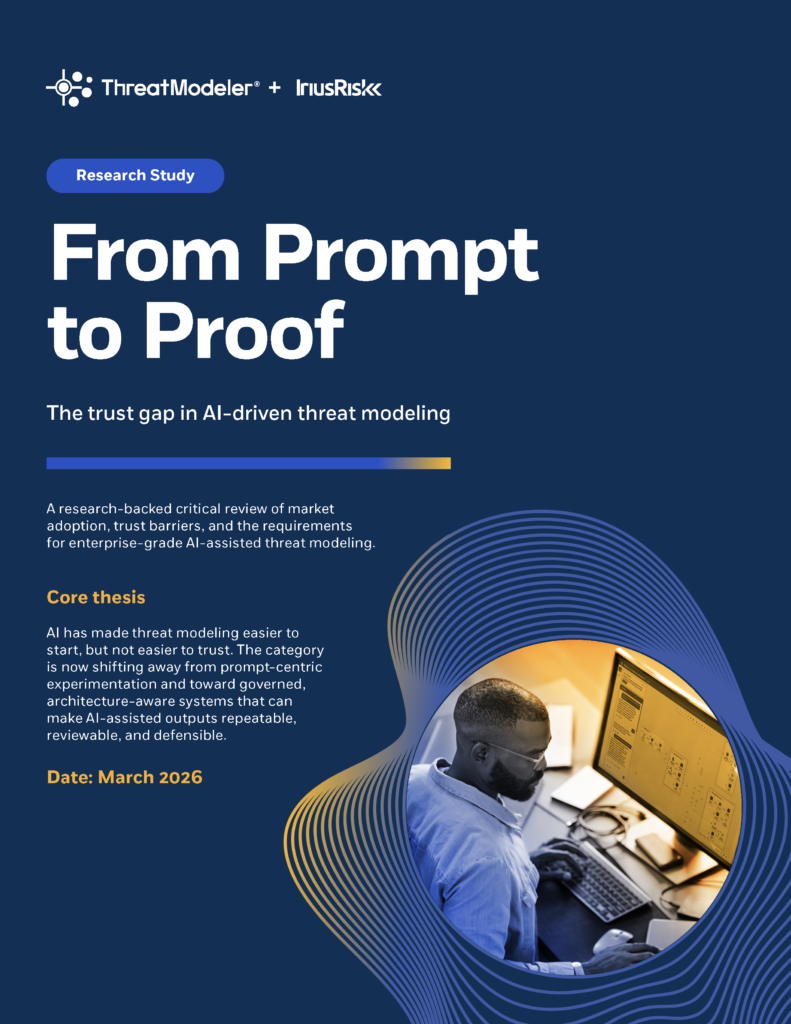
From Prompt to Proof

The Trust Gap in AI-driven Threat Modeling

How is the market adopting AI in threat modeling?

Read our research-backed critical review of the impact on enterprise-grade, AI-assisted threat modeling.


The Challenge: AI has made threat modeling faster to start, but not easier to trust. Organizations are rapidly adopting AI-assisted approaches, yet confidence in the outputs remains low—especially in regulated, safety-critical, and complex environments. Only a small fraction of teams fully trust AI-generated threat models, largely due to concerns around accuracy, explainability, governance, and validation effort. The result is a growing gap: AI promises speed, but security demands assurance. Without a way to make AI outputs repeatable, reviewable, and defensible, threat modeling risks becoming inconsistent, ungoverned, and difficult to scale across modern architectures.


The Solution: The next phase of threat modeling requires more than prompt-based AI—it requires a governed, architecture-aware system that operationalizes AI within a deterministic framework. By embedding AI into a structured, repeatable, and auditable process, organizations can translate architecture and intent into consistent security decisions across the SDLC. This approach ensures that AI-assisted outputs are not just fast, but also traceable, validated, and aligned to real systems and compliance requirements—turning threat modeling into a scalable, enterprise-grade practice rather than an experimental exercise.

Who needs this guide:

  • Security teams managing risk across distributed and cloud-native systems
  • CISOs and security leaders aligning programs with rapid development cycles
  • Architects and engineering leaders exploring AI-driven or internal tooling options
  • Organizations seeking scalable, repeatable, and auditable threat modeling practices

What’s inside:

  • Why AI adoption in threat modeling is accelerating—but trust in its outputs remains the primary barrier to enterprise use
  • How cloud complexity and AI-driven development are reshaping design-time security requirements and workflows
  • The specific gaps between AI-generated outputs and enterprise expectations for governance, accuracy, and auditability
  • What defines an enterprise-ready approach to AI-assisted threat modeling—and how to close the trust gap at scale